
Understanding the Roots: Types and Causes of Dog Aggression
To effectively implement canine aggression training, we first have to understand that aggression isn’t a single “personality trait.” Instead, it is a range of behaviors used for a specific purpose—usually to create distance between the dog and something they find threatening.
In our experience serving the Middle Tennessee area, from Murfreesboro to Smyrna, we see that most aggression falls into a few key categories:
- Fear-Based Aggression: This is the heavyweight champion of behavior issues. Scientific research on fear and aggression confirms that fear is a critical element in the majority of cases. A fearful dog feels cornered and believes that “the best defense is a good offense.”
- Resource Guarding (Possessive Aggression): This is an inborn instinct. Whether it’s a food bowl, a favorite toy, or even a stolen tissue, the dog is driven to protect what they value. This isn’t about “dominance”; it’s about survival instinct.
- Territorial Aggression: This occurs when a dog perceives an intruder (like the mail carrier or a neighbor in Rockvale) approaching their home or yard.
- Protective Instincts: Dogs may act aggressively if they believe a family member is in peril. This often surfaces when new babies are introduced or when strangers approach a “guarded” owner.
- Pain-Elicited Aggression: Even the sweetest Golden Retriever can snap if they are in pain. Medical issues like hip dysplasia or ear infections can lower a dog’s threshold for tolerance.
- Impulse Control Aggression: This is a complex condition where a dog reacts inappropriately to being controlled. It often surfaces during social maturity (between 12 and 36 months). These dogs aren’t “mean”; they are anxious and struggle to gather information about their social environment.
- Predatory Drive: Distinct from other types, this rarely involves a warning growl. It is the instinct to chase and grab fast-moving objects, like bicycles or squirrels.
- Redirected Arousal: This happens when a dog is highly agitated by one stimulus (like a dog behind a fence) and bites the person or animal closest to them because they can’t reach the actual target.
Recognizing Early Warning Signs and Reactivity
One of the biggest mistakes we see in canine aggression training is missing the “whispers” before the “shouts.” Dogs almost always communicate discomfort before they bite.
Early Warning Signs include:
- Whale Eye: When a dog shows the whites of their eyes while keeping their head still.
- Lip Licking and Yawning: These are “displacement behaviors” indicating high stress.
- Body Freezing: A sudden stillness or rigidity is a major red flag that an outburst is imminent.
- Tail Flagging: A high, stiff, vibrating tail is not a “happy” wag; it’s a sign of high arousal and potential conflict.
- Guttural Barking: A low-pitched, vibrating bark that sounds different from their “someone is at the door” bark.
Reactivity vs. Aggression: What’s the Difference?
It is vital to distinguish between a reactive dog and an aggressive one. While they look similar, the intent is often different.
| Feature | Reactive Dog | Aggressive Dog |
|---|---|---|
| Primary Driver | Over-arousal or frustration (often fear-based) | Intent to cause harm or eliminate a threat |
| Common Behaviors | Lunging, barking, “acting like a monster” on leash | Hard stares, silent approach, damaging bites |
| Communication | Loud and dramatic to make the “scary thing” go away | Often subtle warnings followed by physical contact |
| Function | Distance-increasing | Conflict-ending or defensive |
Managing these behaviors requires “threshold management.” This means identifying the distance at which your dog can see a trigger without “blowing up.” If your dog is barking and lunging, they are “over threshold,” and no learning is happening. Our goal in canine aggression training is to work in that “sweet spot” where the dog is aware of the trigger but still able to focus on us.
Proven Methods for Canine Aggression Training
When we move into active training, we focus on changing the dog’s emotional response rather than just suppressed the outward behavior.
- Desensitization: This involves gradual exposure to the trigger at a very low intensity. If your dog reacts to other dogs, we might start by looking at a dog 100 yards away in a park in Walterhill.
- Counter-conditioning: We pair the “scary thing” with something wonderful (like high-value treats). Eventually, the dog learns that “stranger = chicken,” changing their internal emotional state from fear to anticipation.
- Behavior Adjustment Training (BAT): Developed by Grisha Stewart, this method gives the dog a sense of control by rewarding them with “functional rewards” (like moving away from the trigger) when they show calm behavior.
- Constructional Aggression Treatment (CAT): This advanced technique uses the removal of the trigger as a reward for calm, non-aggressive body language.
- Positive Reinforcement & Mark and Reward: We use a “marker” (like a clicker or a specific word) to tell the dog exactly when they’ve made a good choice, followed by a reward.
- Response Substitution: We teach the dog an alternative behavior that is incompatible with aggression. A dog cannot lunge at a stranger if they are focused on a high-stakes “heel” or “sit.”
The Role of Fear in Canine Aggression Training
We must address the elephant in the room: insecurity. In 99% of reactivity cases, the dog’s behavior is rooted in fear. When a dog feels unsafe, their brain shifts into “survival mode.”
Punishing a fearful dog for growling is like taking the batteries out of a smoke detector. You haven’t put out the fire; you’ve just removed the warning system. This often leads to “the bite that came out of nowhere” because the dog was taught that communicating their discomfort results in punishment. Instead, we build confidence through consistent, predictable responses and by maintaining a “safety distance” where the dog feels secure enough to learn.
Safety First: Management Tools and Environmental Control
Before we can fix the behavior, we must stop the “practice.” Every time a dog successfully scares away a trigger by barking or biting, the behavior is reinforced.
Essential Safety Tools:
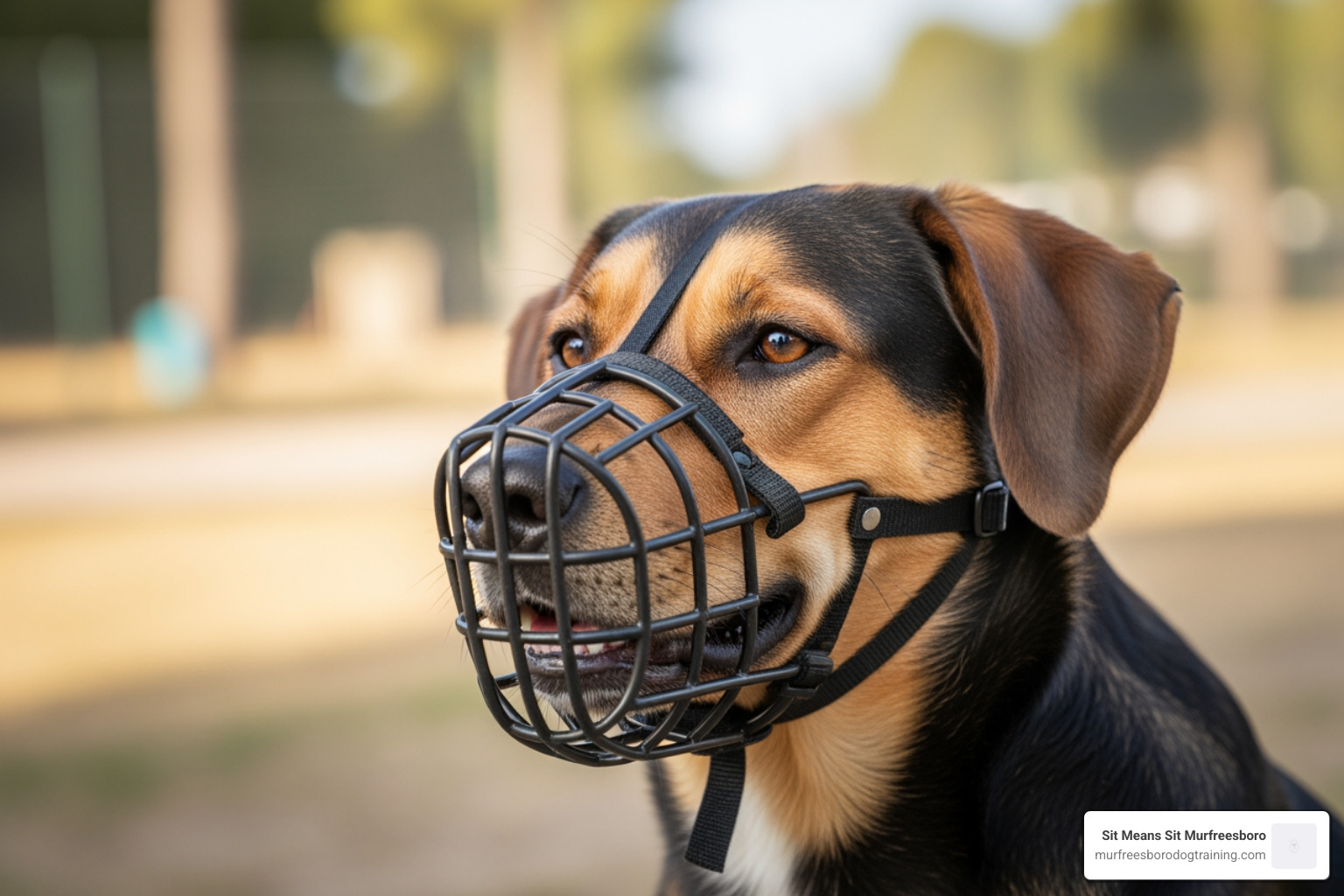
- Basket Muzzles: These are the gold standard for safety. A properly fitted basket muzzle allows the dog to pant, drink, and take treats while ensuring they cannot bite. It provides the owner with the “emotional bandwidth” to stay calm during training.
- Head Halters: These tools (like a Gentle Leader) give us control over the dog’s head. If you can control the head, you can redirect the dog’s gaze away from a trigger.
- Fixed-Length Leashes: Never use retractable leashes with an aggressive dog. They offer zero control and can snap under the pressure of a lunge.
- Crates and Physical Barriers: Use baby gates and crates to manage the home environment, especially when visitors arrive at your home in Christiana or Rutherford County.
For those in Middle Tennessee looking for structured environments, exploring more info about training programs can provide a roadmap for using these tools effectively. Management is not a failure; it is a responsible way to ensure public safety while you work on the long-term fix.
When to Seek Professional Help and Medical Intervention
Aggression is complex and potentially dangerous. You should seek help from a certified behavior consultant or a veterinarian if:
- Your dog has a bite history: Once a dog has made physical contact, the risk level increases significantly.
- The behavior changed suddenly: This often points to a medical cause.
- You feel afraid of your dog: If the bond is broken, you cannot effectively train.
A veterinarian can rule out thyroid abnormalities, hormonal imbalances, or chronic pain that might be fueling the fire. In many cases, medications that reduce anxiety can be a literal lifesaver. These drugs don’t “drug” the dog into a stupor; they lower the dog’s baseline anxiety so that they are actually capable of learning the lessons we are trying to teach.
Long-Term Strategies for Canine Aggression Training
Success in canine aggression training isn’t about a “quick fix” over a weekend. It’s about a lifestyle shift.
- Consistency and Repetition: Dogs thrive on rules. Everyone in the household must react to the dog’s behavior in the exact same way.
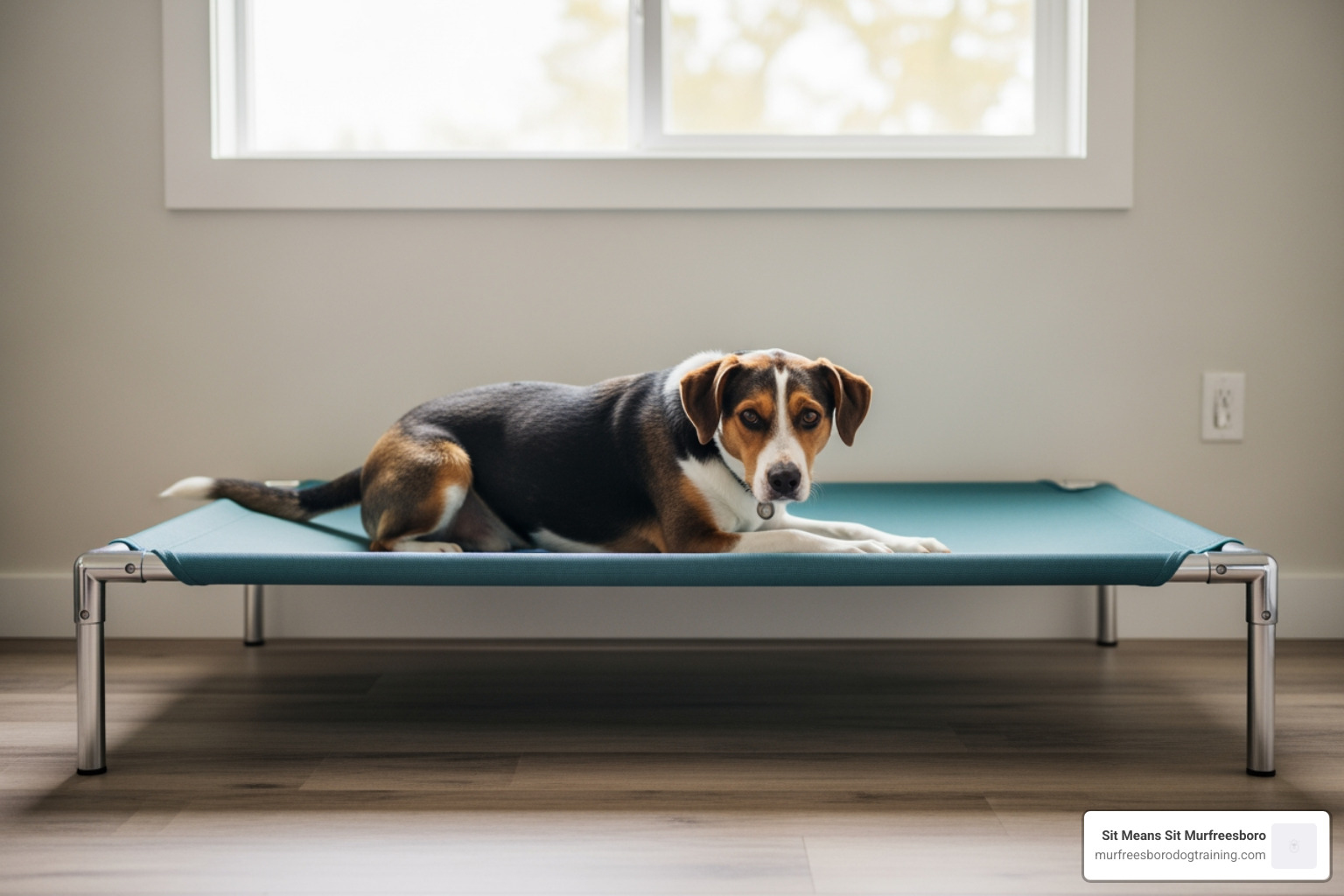
- Impulse Control: We teach dogs to “earn” what they want by being calm. This often starts with the “place” command.
- Owner Advocacy: You are your dog’s voice. If a stranger in a park in Lascassas asks to pet your dog, it is your responsibility to say, “No, he’s in training and needs space.”
- Progress Tracking: Keep a log of triggers and reactions. Seeing that your dog can now handle a trigger at 20 feet when they used to explode at 50 feet is vital for staying motivated.
Implementing Reliable Obedience for Canine Aggression Training
Reliable obedience is the foundation of safety. A dog that is locked into a “heel” or a “focus” exercise is mentally occupied. They are looking to you for leadership rather than scanning the environment for threats. At Sit Means Sit Murfreesboro, we focus on real-world reliability. It’s one thing for a dog to “sit” in your kitchen; it’s another for them to do it while a cyclist passes by on a Rutherford County trail. We use a balanced approach to ensure that the dog understands there are consequences for breaking safety protocols, but also massive rewards for choosing the right path.
Frequently Asked Questions about Aggression Training
Can an aggressive dog ever be fully cured?
We prefer the term “managed” over “cured.” While we can significantly reduce the frequency and intensity of aggressive outbursts, a dog with a history of aggression will always require a higher level of vigilance. Stress can cause a dog to fall back on old “survival” strategies, so ongoing management is key.
Is medication necessary for aggression training?
Not always, but it is a powerful tool. Think of it as a bridge. If a dog is in a constant state of “fight or flight,” their brain is physically incapable of processing new information. Anti-anxiety medication can “lower the volume” on their fear, allowing the training to actually take hold.
How do I know if my dog is reactive or aggressive?
It often comes down to intent and communication. A reactive dog is usually “noisy” and “big” because they want the trigger to go away. An aggressive dog may be quieter, more focused, and their intent is to make physical contact to end the perceived threat. Both require professional assessment to ensure safety.
Conclusion
Living with an aggressive dog is exhausting, but you don’t have to steer it alone. From the quiet streets of Rockvale to the busy centers of Murfreesboro, we’ve helped countless families reclaim their lives and their bonds with their dogs.
At Sit Means Sit Murfreesboro, we provide personalized coaching and professional assessments to help you understand the “why” behind the bite. We don’t just train dogs; we empower owners to become confident advocates for their pets. Through real-world reliability and expert strategies, we can help you move beyond the bite and toward a more peaceful future.
Transform your dog’s behavior today and take the first step toward a safer, happier life for you and your canine companion.