

Why Your Dog’s Behavior Matters More Than You Think
Canine behavior solutions are practical strategies that address common issues like aggression, anxiety, reactivity, and destructiveness through positive reinforcement, behavior modification, and owner education. Effective solutions focus on understanding the root cause—whether it’s fear, unmet needs, or lack of training—and use humane methods to build trust and teach new behaviors.
Quick Overview of Common Canine Behavior Solutions:
| Behavior Problem | Root Cause | Solution Approach |
|---|---|---|
| Aggression | Fear, anxiety, or lack of socialization | Counterconditioning, desensitization, safety protocols |
| Separation Anxiety | Panic when left alone | Gradual desensitization, crate training, calming routines |
| Leash Reactivity | Frustration, fear, or over-arousal | Distance management, reward-based redirection |
| Resource Guarding | Instinctive survival behavior | Trade-up games, trust-building, no punishment |
| Destructive Chewing | Boredom, teething, inadequate outlets | Mental enrichment, appropriate chew toys, exercise |
Behavior problems are one of the leading causes of relinquishment and euthanasia in dogs. They’re not a character flaw—they’re communication. Dogs bark, bite, guard, or panic when they’re confused, scared, or don’t have the right outlets for their energy.
Most behavior issues stem from unmet needs, not defiance. Dogs need mental stimulation, physical exercise, clear communication, and consistent routines. Without these, even the sweetest dog can become reactive, anxious, or destructive.
The good news? Nearly every behavior problem can be solved with the right approach. Whether your dog jumps on guests, growls over food, or panics when you leave, there’s a path forward—and it starts with understanding why the behavior is happening.
I’m Stephen Sovenyhazy, and while my professional background is in digital strategy and platform engineering, I’ve spent years researching and implementing canine behavior solutions for my own dogs and those in my community. Through collaboration with certified trainers and extensive study of behavior modification principles, I’ve seen how the right approach transforms both dogs and their owners.
Understanding Common Dog Behavior Problems and Their Root Causes
When we see a dog lunging at the end of a leash or shredding a sofa, our first instinct might be to think the dog is being “bad” or trying to dominate us. However, research into canine behavior solutions shows that behavior is simply a response to an internal state or an external trigger.
According to the ASPCA, Common Dog Behavior Issues like aggression and separation anxiety are often rooted in fear. Aggression is the most common and serious problem owners face, yet it is almost always a defensive mechanism. A dog who growls when you approach their food bowl isn’t trying to be the “alpha”; they are experiencing resource guarding, an ancestral survival instinct. They are terrified that their “treasure” will be taken away.
Separation anxiety is another heavy hitter. Many dogs become destructive or disruptive when left alone because they are experiencing a genuine panic attack. It’s not spite; it’s a physiological “meltdown.” Similarly, destructive chewing often stems from a lack of appropriate outlets for a dog’s predatory drive or simple boredom. If we don’t give our dogs a job to do in Murfreesboro, they’ll find one—and you probably won’t like the “decorating” they do to your baseboards.

Identifying Signs of Fear and Stress
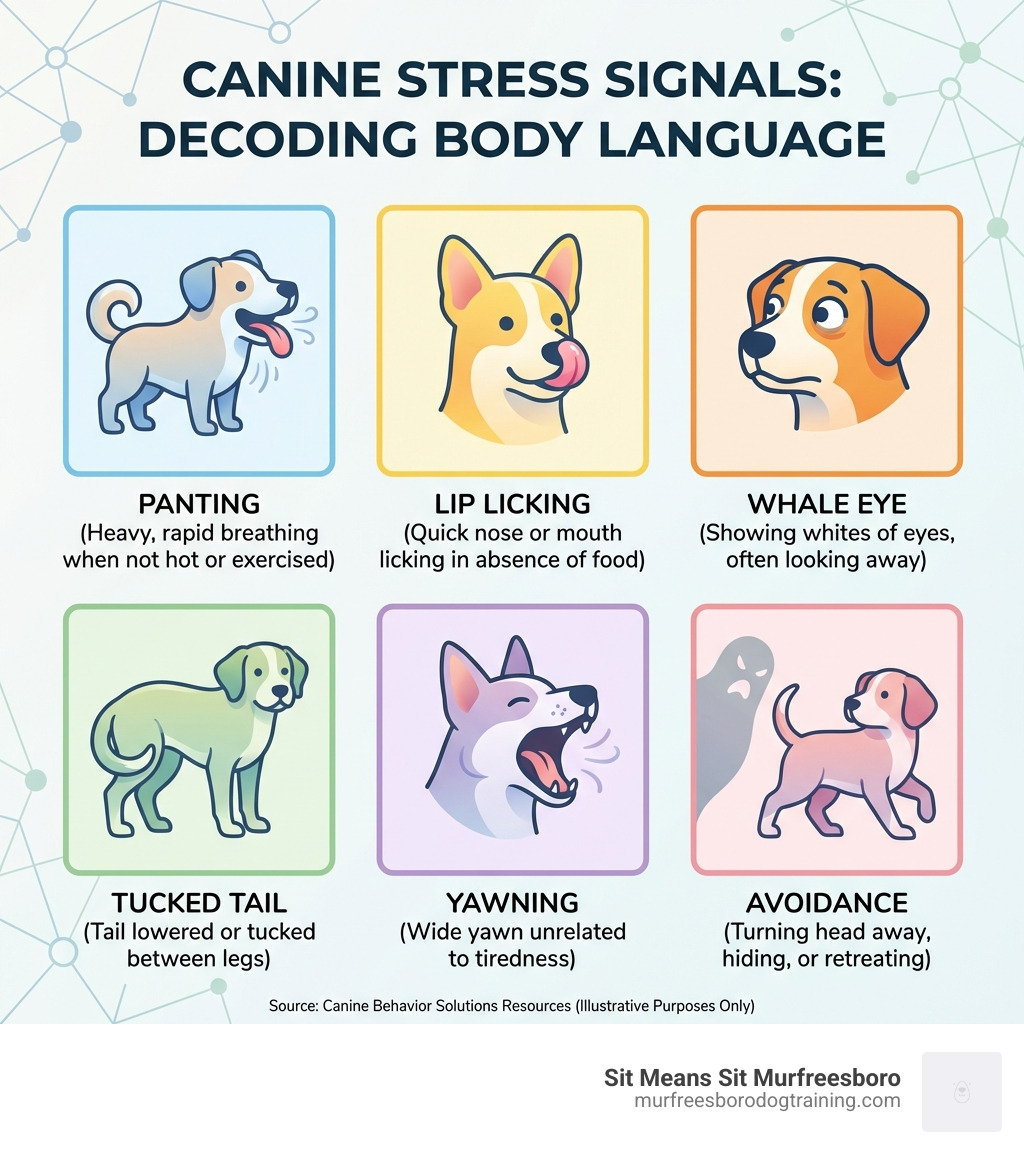
To implement effective canine behavior solutions, we must first become fluent in “Dog.” Dogs communicate their discomfort long before they resort to biting or barking. We often miss the subtle signs of stress:
- Panting: When it’s not hot and the dog hasn’t been exercising.
- Lip Licking: A quick flick of the tongue when they aren’t eating.
- Whale Eye: When you can see the whites of the dog’s eyes because they are turning their head away but keeping their eyes on the “threat.”
- Avoidance: Turning the body away or sniffing the ground suddenly to avoid a social interaction.
- Tucked Tail: A classic sign of fear and submission.
Why Destructive Behaviors Occur
Destruction is rarely about the object being destroyed. It’s about the energy behind the action.
- Boredom: High-drive breeds in Rutherford County need a way to burn mental energy.
- Lack of Exercise: A tired dog is a well-behaved dog.
- Isolation: Dogs are social animals; extreme isolation leads to distress.
- Teething: Puppies explore the world with their mouths, and their gums hurt!
- Predatory Drive: Some dogs have an innate need to “dissect” plush toys (or pillows) to satisfy a biological urge.
Comprehensive Canine Behavior Solutions: Training Philosophies and Approaches
In canine behavior solutions, there are various schools of thought. At Sit Means Sit Murfreesboro, we believe in a balanced approach that focuses on real-world reliability. We want your dog to listen not just in your kitchen, but also at the Stones River Greenway when a squirrel dashes by.
| Strategy | Management (Short-Term) | Behavior Modification (Long-Term) |
|---|---|---|
| Goal | Prevent the behavior from happening. | Change the dog’s emotional response. |
| Examples | Using a crate, baby gates, or a leash. | Counterconditioning and desensitization. |
| Benefit | Immediate safety and peace of mind. | Lasting change and improved bond. |
Positive reinforcement is the cornerstone of modern training. It involves rewarding the behaviors we want to see more of. However, for complex issues like reactivity, we also use counterconditioning (changing the dog’s association with a trigger from “scary” to “great”) and desensitization (gradually exposing the dog to the trigger at a distance where they remain calm).
Key Components of a Successful Behavior Modification Plan
A plan is only as good as its execution. Success requires:
- Consistency: Everyone in the household must use the same cues and rules.
- Clear Communication: Using marker words (like “Yes!”) to tell the dog exactly when they’ve done something right.
- Incremental Progress: We don’t ask a fearful dog to go to a crowded park on day one. We start in the driveway.
- Reward-Based Learning: Motivation is key. Whether it’s high-value treats or a favorite tug toy, the dog needs a reason to work.
Choosing Ethical Canine Behavior Solutions
When looking for help in Middle Tennessee, it’s vital to choose a qualified professional. The American Veterinary Society of Animal Behavior recommends choosing trainers who understand the science of learning and prioritize humane methods. Avoid anyone who relies on fear or pain to “break” a dog. True canine behavior solutions empower the dog to make better choices, rather than suppressing their personality through intimidation.
Practical Strategies for Managing Reactivity and Anxiety
Reactivity—often mistakenly called aggression—is usually a “big” reaction to a stimulus. A leash-reactive dog might bark and lunge at other dogs because they feel trapped by the leash and want the other dog to go away.
According to the Practical Management Tips for Dogs with Behavioral Issues – The American Veterinary Society of Animal Behavior, management is the first step. If your dog barks at the mailman, close the blinds! Preventing the dog from “practicing” the unwanted behavior is crucial because every time they do it, the habit gets stronger.
Managing Separation Anxiety and Destructiveness
If your dog suffers from separation anxiety, punishment is the worst thing you can do. It only adds more fear to an already panicked dog. Instead:
- Crate Training: Make the crate a “zen den” with comfy bedding and long-lasting chews.
- Desensitization to Departure Cues: Pick up your keys and put on your shoes, but then sit down and watch TV. This teaches the dog that your “leaving signals” don’t always mean you’re disappearing.
- Interactive Toys: Use food puzzles to keep their brain occupied.
- Calming Pheromones: Some owners find success with diffusers that mimic a mother dog’s soothing scents.
Addressing Resource Guarding Safely
Never just snatch something away from a guarding dog. This confirms their fear that you are a “thief.” Instead, play the “Trade-Up Game.” If they have a bone, offer them a piece of chicken. They drop the bone, get the chicken, and—this is the magic part—you give the bone back. You become the person who adds value, not the person who takes it away.
The Role of Environment and Communication in Behavioral Wellness
A dog’s environment in Smyrna or Rockvale significantly impacts their mental health. A dog stuck in a backyard with no interaction will naturally develop “nuisance” behaviors. Canine behavior solutions must include environmental enrichment.
Creating an Enriching Home Environment
Think of enrichment as “cross-training” for your dog’s brain.
- Sniffing Walks: Let your dog lead with their nose. Sniffing lowers a dog’s heart rate and provides immense mental stimulation.
- Food Puzzles: Stop using a bowl! Make them work for their kibble using snuffle mats or wobblers.
- Decompression Time: After a stressful event (like a vet visit), give your dog 48 hours of “quiet time” to let their cortisol levels drop.
Effective Communication to Prevent Problems
We often talk to our dogs in full sentences, which just sounds like “blah, blah, blah” to them. Effective communication relies on:
- Marker Words: A short, sharp “Yes!” or a clicker to mark the exact moment of success.
- Body Language: Dogs are masters of reading our posture. Standing tall and calm projects leadership; hovering over a dog can feel threatening.
- Timing: You have about 1.5 seconds to reward a behavior for the dog to make the connection.
When to Seek Professional Help for Canine Behavior Solutions
While many minor issues can be handled at home, some situations require an expert eye. If your dog has a bite history, displays severe phobias (like trembling for hours during thunderstorms), or shows intra-household aggression, it’s time to call in the pros.
The Benefits of Professional Behavior Modification
Working with a company like Sit Means Sit Murfreesboro provides:
- Safety: We know how to handle reactive dogs without putting anyone at risk.
- Expert Assessment: We can often see triggers that owners miss.
- Customized Plans: No two dogs are the same. A Border Collie in Lascassas needs a different plan than a senior Pug in Christiana.
- Long-Term Reliability: We don’t just fix the problem for today; we give you the tools for a lifetime of obedience.
Why Owner Education is Vital for Canine Behavior Solutions
We aren’t just training your dog; we’re coaching you. You live with the dog 24/7; we don’t! Understanding canine behavior solutions means learning how to handle the leash, when to give a reward, and how to read your dog’s “mood” before a situation escalates. Consistency is the bridge between a “trained dog” and a “well-behaved family member.”
Frequently Asked Questions about Canine Behavior Solutions
How do I know if my dog’s behavior is medical or behavioral?
Always start with a vet visit. Sudden aggression, house soiling, or irritability can be signs of pain, thyroid issues, or neurological problems. If the vet gives a clean bill of health, then we move to behavioral strategies.
Can older dogs benefit from behavior modification?
Absolutely! The old saying is wrong—you can teach an old dog new tricks. While it might take a bit longer to undo years of habit, senior dogs are often very focused and eager to learn if the rewards are right.
How long does it take to see results from a behavior plan?
Behavior isn’t a light switch; it’s a thermostat. You’ll see small “wins” quickly, but true modification for deep-seated issues like aggression or anxiety can take weeks or months of consistent work.
Conclusion
Creating a “Happy Paws, Happy Home” environment isn’t about having a robotic dog who never barks. It’s about building a relationship based on trust, clear communication, and mutual respect. By implementing proven canine behavior solutions, you’re not just stopping “bad” behaviors—you’re giving your dog the confidence they need to steer the world safely.
At Sit Means Sit Murfreesboro, we specialize in changing these challenges into success stories. Whether you’re in Murfreesboro, Walterhill, or anywhere in Rutherford County, we’re here to provide the real-world reliability you need. Ready to start your journey toward a better life with your dog? More info about our training programs is just a click away. Let’s turn those frustrations into “Happy Paws” together!