
Why Basic Tricks to Teach Your Puppy Matter More Than You Think

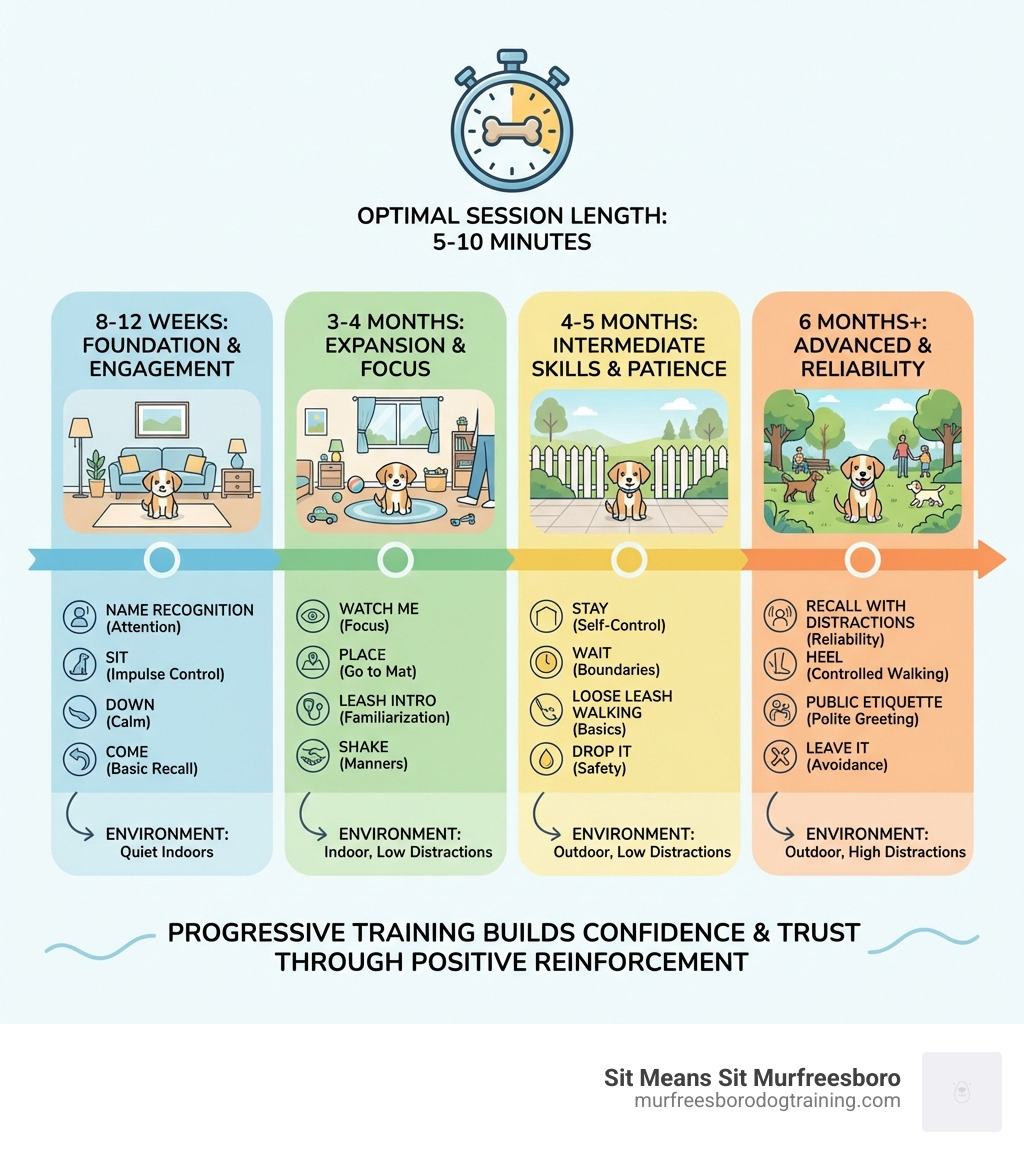
Basic tricks to teach your puppy include essential commands like Sit, Down, Stay, Come, and name recognition. These foundational skills typically start around 8 weeks old using positive reinforcement, high-value treats, and short 5-10 minute training sessions. Here’s what every puppy should learn first:
- Name Recognition – Building attention and recall foundation
- Sit – The gateway command for impulse control
- Down – Essential for calm behavior and safety
- Stay – Teaching patience and self-control
- Come When Called – The most important safety command
- Loose Leash Walking – Making walks enjoyable for everyone
- Watch Me/Focus – Managing distractions and engagement
- Wait – Preventing door dashing and teaching boundaries
- Shake/Paw – Building social manners and confidence
- Place/Go to Mat – Creating calm greeting behaviors
Training your puppy isn’t just about teaching tricks—it’s about building confidence, trust, and a shared language between you and your dog. According to research, puppies can begin simple training as soon as they come home, usually around 8 weeks old, and learning these basic commands creates a foundation for a well-mannered companion you can enjoy anywhere.
Early training does more than prevent behavioral issues. It provides crucial mental stimulation, helps puppies understand expectations, and makes them feel more secure in their environment. The bond you build through these short, positive training sessions will pay dividends throughout your dog’s life.
I’m Stephen Sovenyhazy, and while my primary expertise is in digital marketing and platform engineering, I’ve worked with numerous dog training businesses to understand what makes effective training content resonate with frustrated owners seeking real solutions. The basic tricks to teach your puppy outlined here are backed by professional trainers and proven positive reinforcement methods that transform anxious, disobedient puppies into confident companions.
The Essentials of Puppy Training Success
Before we dive into the “how-to” of each command, we need to talk about the “how-to” of the human. Successful training isn’t just about what the puppy does; it’s about our consistency and the methods we use. In Murfreesboro and across Middle Tennessee, we see many owners who are eager to start but aren’t sure where to begin.
The gold standard for modern training is positive reinforcement. This is the process of giving your dog a reward—like a treat, praise, or a favorite toy—to encourage the behavior you want. It’s not about “bribing” the dog; it’s about communicating that a specific action results in a great outcome.
When to Start
Puppies are like little sponges. You can begin very simple training as soon as you bring them home to Rutherford County, typically around 8 weeks old. In fact, you can start working on the “Sit” cue with puppies as young as seven weeks of age!
The 10-Minute Rule
A puppy’s attention span is roughly equivalent to that of a toddler. If you try to train for 30 minutes, you’re going to end up with a bored, frustrated puppy and an even more frustrated human. We recommend keeping sessions to no longer than 5 to 10 minutes at first. It is much more effective to do three 5-minute sessions throughout the day than one long marathon session.
High-Value Rewards
To a puppy, not all rewards are created equal. While their standard kibble might work for a quiet living room session, you’ll need something better for harder tasks. Freeze-dried liver is often considered the “filet mignon” of dog treats. Lavish praise and a happy voice are also vital, but puppies often need to be “taught” to like praise by pairing it with food initially.
Setting the Right Environment
Imagine trying to learn calculus in the middle of a carnival. That’s what it’s like for a puppy trying to learn “Stay” while the kids are running around the backyard in Smyrna.
When starting basic tricks to teach your puppy, always begin in a quiet space with minimal distractions. A hallway or a spare bedroom is perfect. As your puppy gets better, you can gradually move to more distracting environments, like your front yard or a local park in Walterhill. Always ensure you have plenty of training treats on hand to keep their focus on you.
The Foundation: Basic Tricks to Teach Your Puppy
Dog training relies on a concept called operant conditioning, which is just a fancy way of saying dogs learn that their actions have consequences. In our case, the consequence is a tasty treat!
We primarily use two techniques:
- Luring: Using a treat like a magnet to guide the puppy’s nose (and body) into the position we want.
- Capturing: Waiting for the puppy to naturally perform a behavior (like sitting) and then immediately rewarding it.
Mastering Name Recognition: The First of Many Basic Tricks to Teach Your Puppy
Before your puppy can learn to “Sit” or “Come,” they need to know that when you speak, they should pay attention.
How to teach it:
- Sit with your puppy in a quiet spot.
- Say their name in a happy, upbeat tone.
- The moment they look at you, say “Yes!” (this is your “marker” word) and give them a treat.
- Repeat this several times.
- Pro Tip: Never use your puppy’s name when you are angry or scolding them. We want them to associate their name with wonderful things, not trouble. This builds the foundation for a reliable recall later on.
Teaching the ‘Sit’ and ‘Down’ Commands
“Sit” is the gateway to all other training. It’s a natural position for dogs and the easiest to lure.
How to teach ‘Sit’:
- Hold a treat right in front of your puppy’s nose.
- Slowly move your hand up and back over their head toward their ears.
- As their nose goes up to follow the treat, their bottom will naturally go down.
- The second their rear touches the floor, say “Yes!” and reward.
How to teach ‘Down’:
- Start with your puppy in a “Sit.”
- Hold a treat to their nose and move it straight down to the floor between their front paws.
- Once their nose is on the floor, slowly pull the treat along the ground away from them (forming an ‘L’ shape).
- When their chest hits the floor, mark it with “Yes!” and reward.
Building Reliability with ‘Stay’ and ‘Come’
These are the “safety” commands. A dog that stays when a car is passing or comes when called in a busy park in Rockvale is a safe dog.
How to teach ‘Stay’:
- Ask your puppy to “Sit” or “Down.”
- Hold your hand up like a stop sign and say “Stay.”
- Wait just two seconds. If they don’t move, say “Yes!” and reward.
- Introduce a release word like “Free” or “Okay” to let them know the job is done.
- Gradually increase the time (duration) and then the distance (how far you step away).
How to teach ‘Come’ (Recall):
- Start indoors. Say “Come!” in an excited voice.
- When they move toward you, use tug toy rewards or treats to make the arrival a party.
- For outdoor practice in Lascassas, we highly recommend long leash training. This allows you to practice the “Come” command from 15 to 30 feet away while still maintaining control.
Advanced Basics for Real-World Reliability
Once your puppy has mastered the “big five” in the living room, it’s time to take those skills into the real world. Real-world reliability is what we focus on at Sit Means Sit Murfreesboro. It means your dog listens even when there’s a squirrel, a bicycle, or another dog nearby.
Loose Leash Walking
No one enjoys being dragged down the sidewalk. The goal of loose leash walking is to teach your puppy that being next to you is the most rewarding place to be.
The Strategy:
- Start in your driveway or a quiet street in Christiana.
- Reward your puppy for simply standing next to your leg while on the leash.
- Take one step. If the leash stays slack, reward.
- If the puppy pulls, stop immediately. Don’t yell; just become a tree.
- When the puppy looks back at you or moves to put slack in the leash, reward and move forward again.
Focus and ‘Watch Me’
In a distracting environment, you need a way to get your dog’s attention back on you. This is the “Focus” command. It’s especially helpful if you plan on pursuing AKC Canine Good Citizen standards, which require a high level of engagement.
How to teach it:
- Hold a treat between your thumb and forefinger.
- Bring the treat up to your eye level (between your eyes).
- Say “Watch me” or “Focus.”
- When the puppy makes eye contact, mark and reward.
- Eventually, you’ll be able to do this without the treat lure, just using the verbal cue.
Social Manners: Shake and ‘Place’
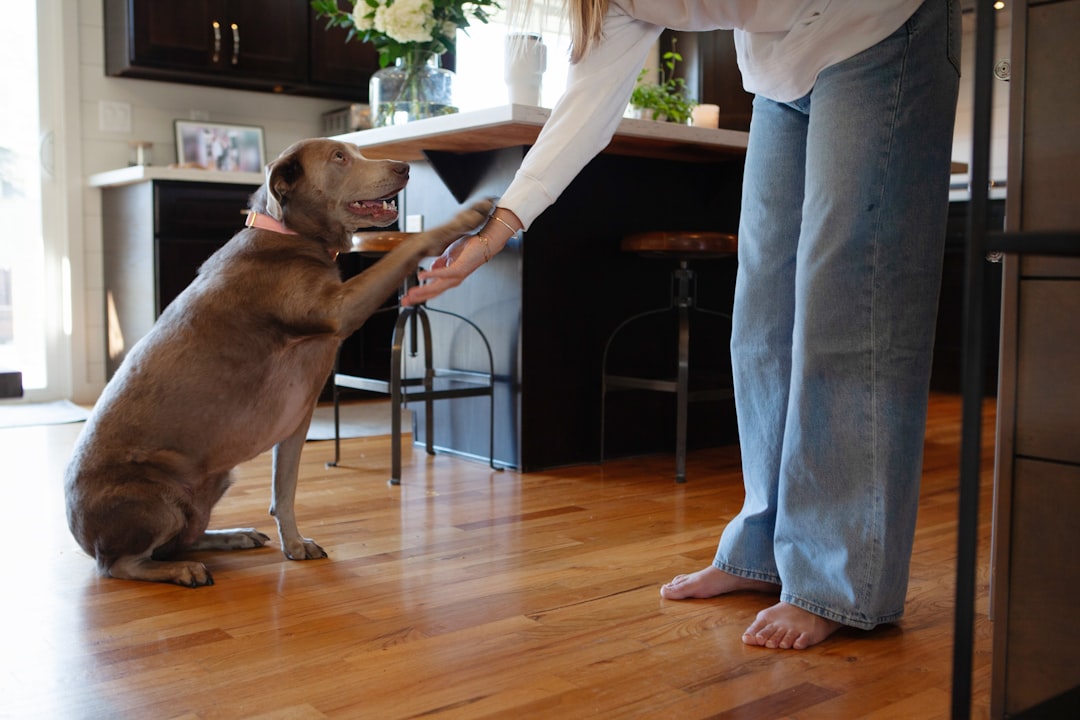
“Shake” is a crowd-pleaser, but “Place” is a lifesaver for doorbell manners.
How to teach ‘Shake’:
- While your puppy is sitting, hold a treat in a closed fist near their paw.
- Most puppies will naturally paw at your hand to get the treat.
- The moment they lift their paw, say “Shake” and reward.
How to teach ‘Place’:
- Choose a specific mat or bed.
- Lure your puppy onto the mat and ask for a “Down.”
- Say “Place” and reward.
- This is perfect for when guests arrive at your home in Rutherford County. Instead of jumping on the guest, your puppy learns to go to their “Place” and stay calm.
Troubleshooting Common Puppy Training Problems
Puppy training is rarely a straight line. You will have days where it feels like your puppy has forgotten everything they ever learned. Don’t worry—this is normal!
Short Attention Spans and Overstimulation
If your puppy starts nipping at the leash, zooming around the room, or completely ignoring you, they are likely overstimulated. They’ve hit their mental limit.
- Solution: End the session on a “win.” Ask for a very simple “Sit” that you know they can do, reward them, and then let them nap. Puppies need a lot of sleep to process what they’ve learned.
The “Contra Freeloader” Concept
Research shows that dogs are actually “contra freeloaders.” This means they often derive more joy and value from working for their food than just having it handed to them in a bowl.
- Tip: Ditch the food bowl! Use your puppy’s breakfast and dinner as the “treats” for your training sessions. It makes mealtime a bonding and learning experience.
Fear Periods
Between 4 and 6 months, many puppies go through a “fear period.” Things that were fine yesterday (like a trash can or a mailbox) might suddenly be terrifying.
- Solution: Never force your puppy toward something they are afraid of. Use high-value rewards to create a positive association from a distance.
Overcoming Distractions
The biggest challenge for owners in Middle Tennessee is moving from the house to the outdoors.
- The Progression: Practice in the house -> the garage -> the driveway -> the sidewalk -> a quiet park.
- If your puppy fails at a new level, it just means the “distraction tax” was too high. Move back one step and try again. For more structured help, you can look into AKC Training Club resources to find local groups practicing in your area.
Frequently Asked Questions about Basic Tricks to Teach Your Puppy
When is the best age to start training my puppy?
As soon as you bring them home! While formal classes usually require puppies to be 10-12 weeks old (and have their vaccinations), you can and should start basic home training at 8 weeks.
How long should puppy training sessions be?
Keep them short and sweet. 5 to 10 minutes is plenty for a young puppy. Frequency is more important than duration—aim for 2 to 3 sessions a day.
What are the best rewards to use for trick training?
For new or difficult tricks, use “high-value” treats like freeze-dried liver, cheese, or small bits of chicken. For tricks they already know well, you can use their regular kibble, verbal praise, or a quick game of tug.
My puppy keeps biting my hands during training. What do I do?
Puppies explore the world with their mouths. If they nip, say “Ouch!” in a high-pitched voice and stop the session for 30 seconds. This teaches them that biting makes the fun and treats stop.
Conclusion
Teaching basic tricks to teach your puppy is about so much more than “showing off” for friends. It is the foundation of a safe, happy, and stress-free life for both you and your canine companion. By starting early, staying consistent, and using positive reinforcement, you are setting your puppy up for success in the real world.
At Sit Means Sit Murfreesboro, we specialize in taking these basics and turning them into rock-solid reliability. Whether you are in Smyrna, Lascassas, or right here in Murfreesboro, we are here to help you steer the “puppy phase” and beyond. Our goal is to transform your dog into a confident, obedient companion you can take anywhere in Middle Tennessee.
Ready to take your puppy’s skills to the next level? Explore our personalized dog training programs and let us help you build the bond of a lifetime!