
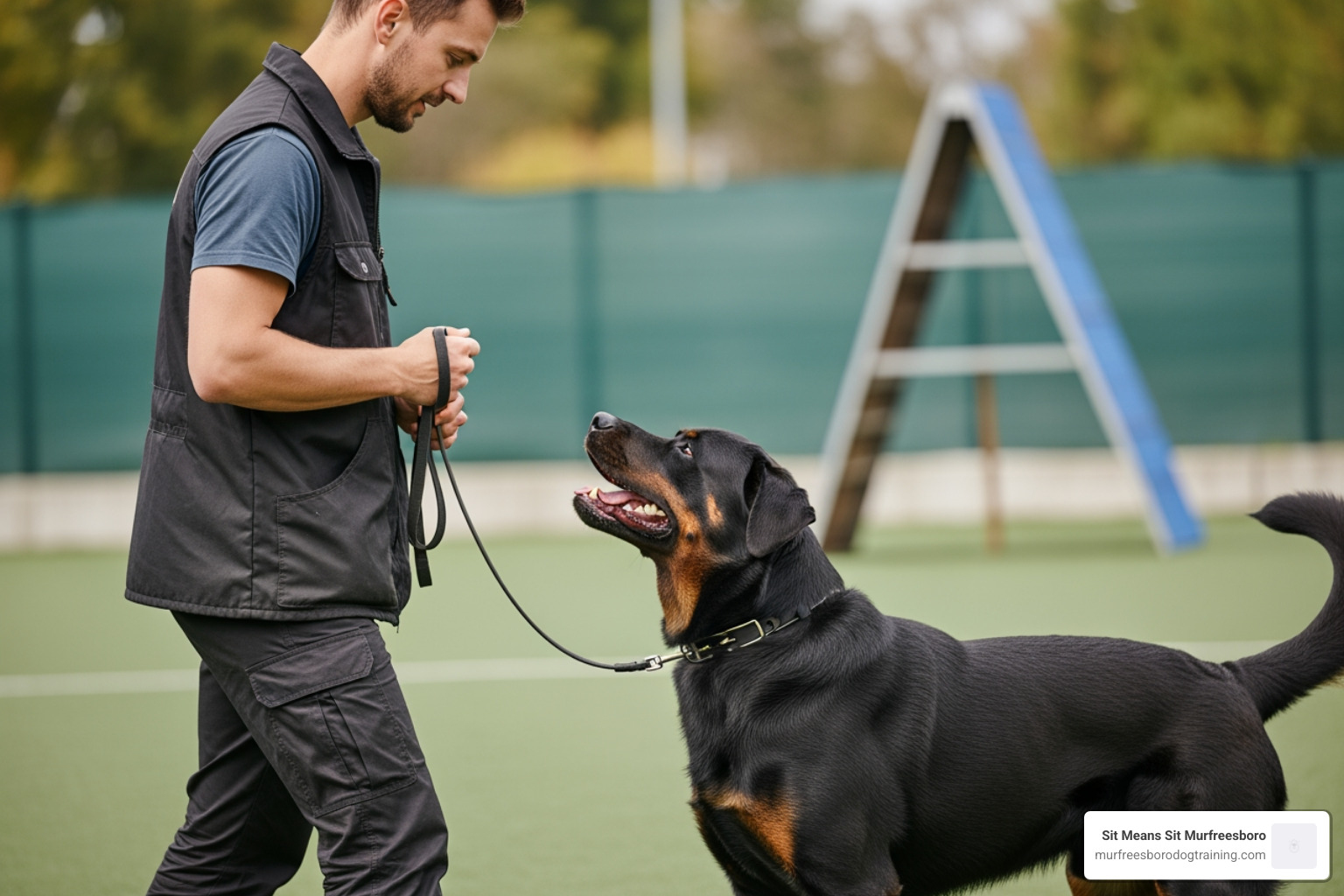
Why a Boot Camp for Aggressive Dogs May Be Your Best Option
A boot camp for aggressive dogs is an intensive residential training program where your dog lives with a professional trainer for a set period—typically 2 to 12 weeks—receiving daily one-on-one behavior modification, obedience conditioning, and socialization in a controlled environment.
Quick Answer: What to Expect from an Aggressive Dog Boot Camp
- Duration: 2–12 weeks minimum, depending on severity
- Cost: $500–$8,800+ (varies by program length and services)
- Training Focus: Aggression toward dogs or people, resource guarding, fear-based reactivity, impulse control, and off-leash obedience
- Owner Involvement: Includes follow-up lessons (typically 6–12 hours) to transfer skills and ensure long-term success
- Best For: Dogs with severe reactivity, bite history, or issues that haven’t improved with other methods
- Not Ideal For: Extreme aggression requiring in-home context or dogs under 6 months old
You’ve tried everything. The trainers. The YouTube videos. The advice from friends. But your dog still lunges, growls, or worse—and you’re running out of hope.
Aggressive behavior isn’t a life sentence. It’s often the result of fear, confusion, lack of socialization, or inconsistent leadership. And while it can feel overwhelming, the right intervention can turn things around fast.
That’s where a boot camp for aggressive dogs comes in. These immersive programs remove your dog from the chaos of daily life and place them in a structured, distraction-controlled environment with professionals who specialize in behavioral rehabilitation. Dogs receive hours of training every day, building new habits through repetition, consistency, and positive motivation.
But boot camps aren’t a magic fix. They require the right program, the right trainer, and—most importantly—your commitment to maintaining the work after your dog comes home.
In this guide, we’ll walk you through how these programs work, what types of aggression they address, how to choose the right one, and what happens after graduation. You’ll also learn when a boot camp isn’t the best fit—and what alternatives might work better for your situation.
I’m Stephen Sovenyhazy, and while my professional background is in digital strategy and web development, I’ve spent years researching and writing about behavioral training solutions, including boot camps for aggressive dogs, to help frustrated owners like you make informed, confident decisions. This guide synthesizes insights from industry-leading trainers, real client experiences, and evidence-based methods to give you a clear, honest look at what to expect.
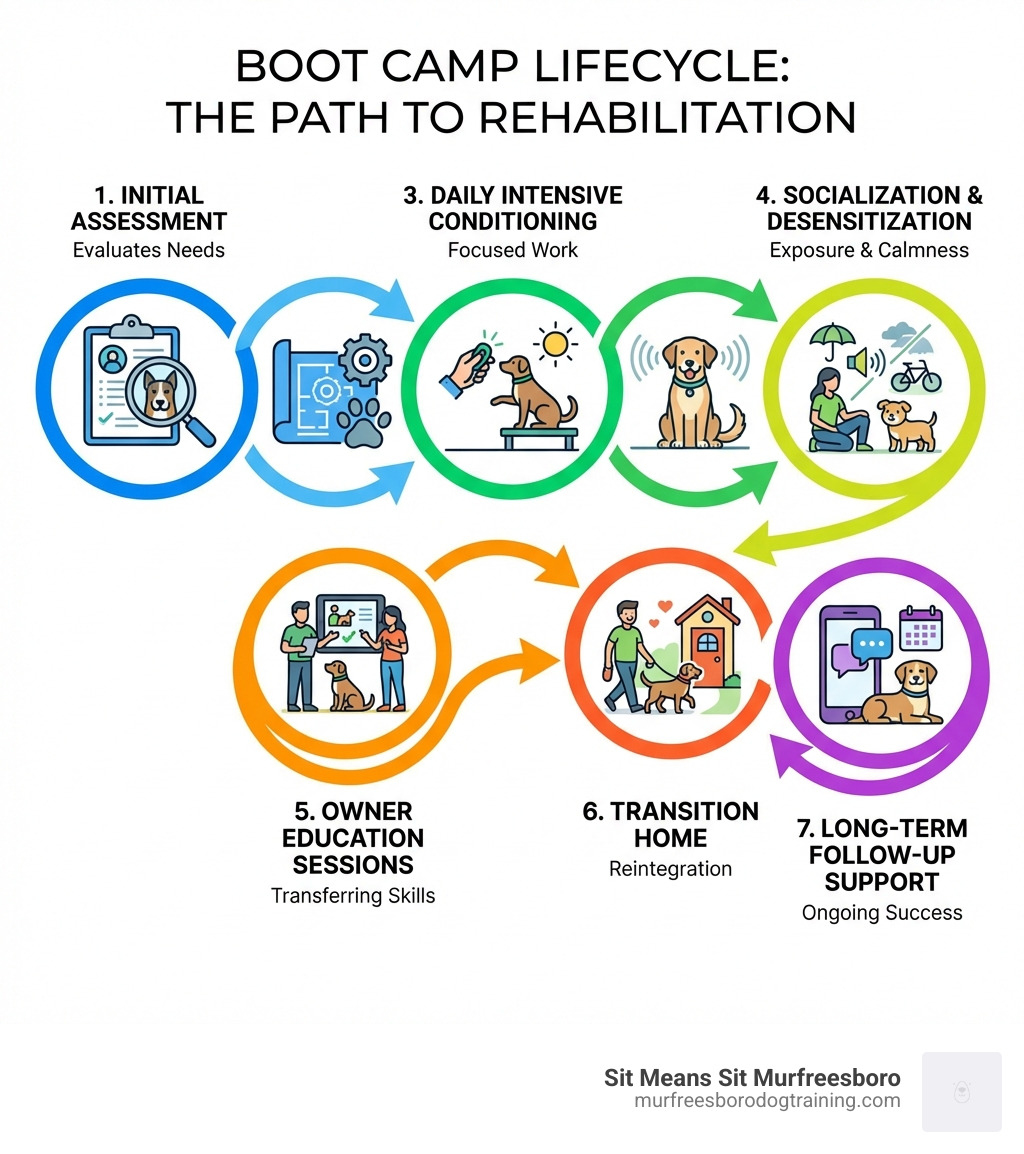
Understanding the Boot Camp for Aggressive Dogs Model
When we talk about a boot camp for aggressive dogs, we are referring to a “board and train” model. Unlike a weekly class where you drop in for an hour, your dog moves into a professional facility. This allows for 24/7 supervision and a level of immersion that is impossible to achieve in a standard home environment.
Professional behaviorists and trainers use this time to break the cycle of reactive habits. By living in a neutral, structured space, the dog is separated from the triggers and stressors of their home life—like the mailman they hate or the neighbor’s dog that always barks. This “reset” is often the first step toward true rehabilitation. For more details on how these immersive setups differ from standard lessons, you can explore our training programs.
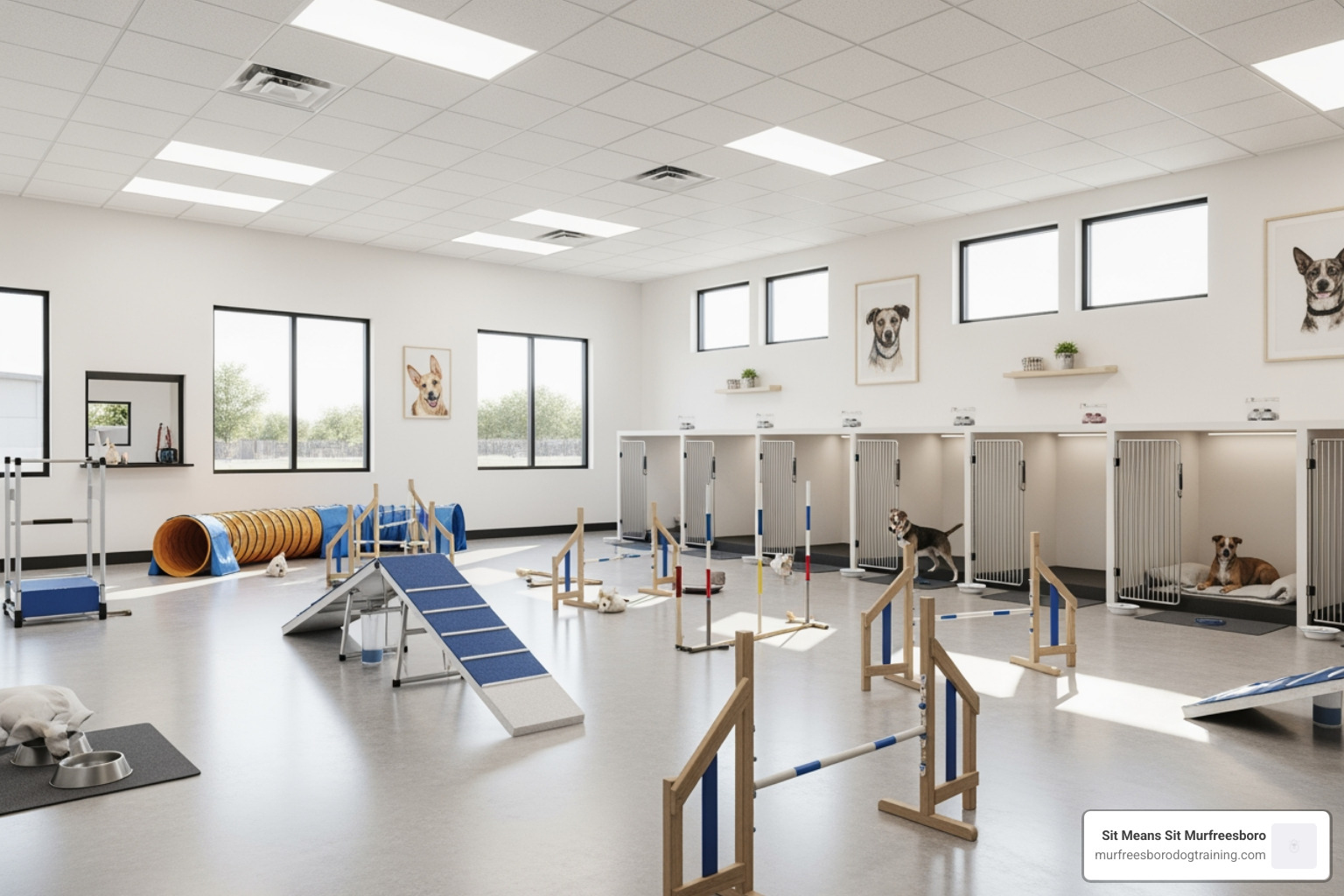
How a Boot Camp for Aggressive Dogs Works
The process begins with an initial assessment. We need to understand why your dog is acting out. Is it fear? Territoriality? Or perhaps a lack of impulse control? Once the root cause is identified, a customized curriculum is developed.
During their stay, your dog undergoes intensive conditioning. This isn’t just about “sit” and “stay.” It involves:
- Behavioral Modification: Replacing aggressive responses with neutral or positive ones.
- Impulse Control: Teaching the dog to look to the handler for guidance rather than reacting instantly to a stimulus.
- Distraction Proofing: Gradually introducing triggers in a controlled way to ensure the dog remains reliable even when things get hectic.
Understanding the mechanics of these behaviors is vital. For those interested in the deeper “why” behind these methods, check out these scientific insights on managing dog aggression.
Is a Boot Camp for Aggressive Dogs Suitable for All Breeds?
In our experience across Middle Tennessee, from Murfreesboro to Smyrna, we’ve seen that almost any breed can benefit from structured training. However, suitability is determined more by the individual dog’s temperament than their breed.
Before a dog is accepted into a high-level boot camp for aggressive dogs, they usually undergo temperament testing. Trainers look for physical stamina and the dog’s ability to handle the mental stress of intensive training. Additionally, most programs have a minimum age requirement (often 6 to 12 months) and strict vaccination verification to ensure the safety of all residents. While breed-specific traits (like the high prey drive of a Terrier or the protective nature of a Shepherd) play a role in the training plan, the goal remains the same: a safe, reliable companion.
Is Your Dog a Candidate? Types of Aggression Addressed
Not every dog that barks at the fence needs a residential boot camp. However, for severe issues, these programs are often the most effective route. We commonly address:
- Dog-to-Dog Aggression: Lunging, snapping, or fighting with other canines.
- Human Reactivity: Fear or aggression directed at strangers or even family members.
- Resource Guarding: Growling or biting over food, toys, or sleeping spots.
- Fear-Based Responses: Aggression stemming from a lack of confidence or past trauma.
If you are dealing with these issues, you might find our expert strategies for canine aggression helpful in understanding the path forward.
Identifying Severe Behavioral Triggers
To fix the problem, we have to find the “spark.” Common triggers include:
- Barrier Frustration: Aggression that only happens when the dog is behind a fence or on a leash.
- Predatory Drift: When high-energy play turns into actual predatory aggression.
- Sibling Rivalry: Conflicts between dogs living in the same household.
- Social Anxiety: A general inability to cope with new environments.
| Aggression Type | Primary Training Priority | Common Methodology |
|---|---|---|
| Fear-Based | Confidence Building | Desensitization & Positive Reinforcement |
| Territorial | Boundary Training | Impulse Control & Leadership |
| Resource Guarding | Trust Building | Trade-up Exercises & “Out” Commands |
| Dog-to-Dog | Neutrality | Pack Dynamics & Distraction Proofing |
The Pros and Cons of Intensive Residential Training
Choosing a boot camp for aggressive dogs is a big decision. It offers faster results because the dog is training multiple times a day, every day. Professional consistency ensures that the dog doesn’t “get away” with bad habits, which often happens at home where owners might be tired or busy.
However, there are trade-offs. The high cost (often ranging from $1,900 for a single week of behavior modification to over $8,000 for long-term programs) can be a barrier. There is also the emotional toll of owner separation. While your dog is away, some owners use tools like a Dog Calming Pheromone Diffuser to prepare the home environment for a calmer return.
Benefits of Professional Socialization
One of the greatest benefits of a boot camp is “neutrality training.” Many owners think socialization means their dog needs to play with every dog they see. In reality, for an aggressive dog, socialization means being able to exist in the same space as others without reacting.
Through controlled exposure and pack dynamics, dogs learn to build confidence. They realize that they don’t have to “take care” of every threat themselves because they can trust their handler. If you’re wondering what this looks like locally, read more about professional training expectations in Murfreesboro.
Choosing the Right Program: Costs, Duration, and Factors
When searching for a boot camp for aggressive dogs in Middle Tennessee, you’ll find a wide range of options. A 3-week minimum stay is standard for basic issues, but severe aggression often requires 8 to 12 weeks of advanced work.
Pricing Variables:
- Short-term (2-3 weeks): $1,500 – $3,000
- Long-term Behavior Modification (4-8 weeks): $4,000 – $7,000
- Premium/Elite Programs (12 weeks+): $8,800+
Don’t just look at the price tag. Check for trainer certifications and ensure the facility carries comprehensive liability insurance. You are trusting them with a dog that has a bite history; safety must be the priority.
Evaluating a Boot Camp for Aggressive Dogs
Transparency is key. A good facility will be open about their safety equipment, such as the use of basket muzzles for initial introductions. They should also be ethical in their use of tools like e-collars, using them as a communication device rather than a punishment.
Most importantly, look for a program that offers extensive follow-up support. The training is only as good as the hand-off to the owner. Part of that hand-off often includes teaching the basics of movement and control, such as how to teach your dog to heel.
The Owner’s Role and Life After Boot Camp
We often tell our clients in Rockvale and Lascassas: “We train the dog, but we educate the human.” You are the most important part of this equation. If the dog returns to a home with no rules or consistency, they will eventually slide back into old habits.
Your role includes:
- Handler Education: Attending private lessons (often 6+ hours) to learn the commands and “language” your dog learned at camp.
- Transition Plans: Following a strict “honeymoon” period at home where the dog’s freedom is limited while they adjust.
- Consistency: Using the same corrections and rewards the trainer used.
Post-Graduation Steps:
- Maintain a daily training schedule (even just 15 minutes).
- Limit triggers for the first 14 days.
- Attend all scheduled follow-up sessions.
- Use the provided “Pet Parent” guides or portals.
Maintaining Results Long-Term
Success doesn’t end when the dog leaves the facility. Many programs in Rutherford County offer group classes or lifetime support to help you stay on track. This ongoing reinforcement is what separates a temporary fix from a permanent lifestyle change.
Frequently Asked Questions about Aggressive Dog Training
Is my dog too aggressive for boot camp?
Very few dogs are “too aggressive,” but some may be too dangerous for certain facility types. A professional assessment will determine if a dog is a candidate for residential training or if intensive in-home sessions are a safer starting point.
What is the typical success rate for behavioral modification?
While no ethical trainer guarantees a 100% “cure,” statistics show that roughly 98% of dogs can achieve a high level of obedience and manageability when the owner is committed to the process.
Are there alternatives to residential programs?
Yes. If you aren’t comfortable leaving your dog, options include private one-on-one lessons or specialized “reactive dog” group classes. However, these usually take much longer to see results compared to the immersion of a boot camp.
Conclusion
At Sit Means Sit Murfreesboro, we understand that living with an aggressive dog is exhausting and isolating. Our goal is to transform your dog into a confident, obedient companion through real-world reliability. Whether you are in Murfreesboro, Smyrna, or anywhere in Middle Tennessee, a boot camp for aggressive dogs can be the turning point your family needs.
Aggression is a complex issue, but with the right structure, professional guidance, and owner dedication, a better life is possible for both you and your dog. Start your dog’s transformation today and reclaim the peace in your home.