

Why German Shepherd Puppy Classes Matter From Day One
German shepherd puppy classes are specialized training programs designed for puppies between 8 weeks and 6 months of age that focus on socialization, basic obedience, and breed-specific behavioral guidance during critical developmental windows.
Key reasons to enroll your GSD puppy in classes:
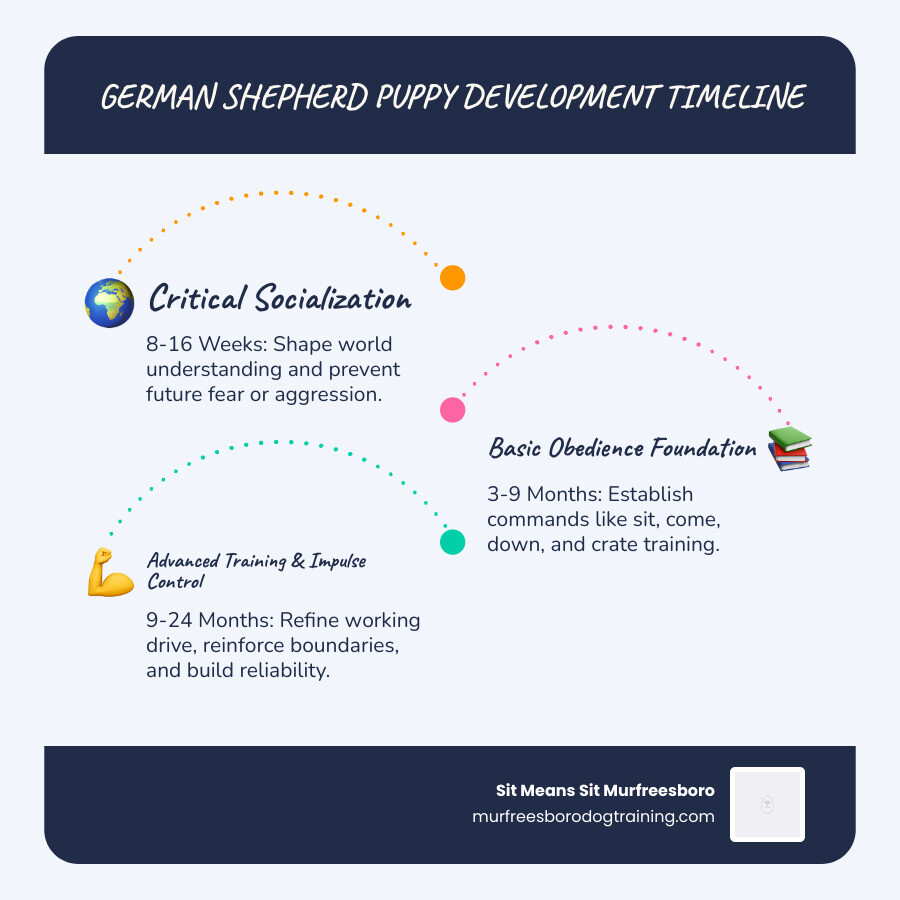
- Critical socialization window closes at 12-16 weeks – missing this period can lead to fear and aggression issues later
- Basic obedience foundation – teaches sit, down, come, crate training, and bite inhibition
- Breed-specific guidance – addresses high energy, protective instincts, and “land shark” nipping behavior
- Professional structure – short 5-10 minute sessions matched to puppy attention spans
- Prevents destructive behaviors – channels intelligence and work drive before bad habits form
German Shepherds consistently rank in the top five most popular dog breeds in America, and for good reason. They’re intelligent, loyal, and incredibly capable. But that same intelligence can work against you if not channeled properly from the start.
Without early training and socialization, your smart puppy may develop stubbornness, excessive barking, destructive chewing, or anxiety around strangers. The investment you make in the first few months shapes your dog’s entire life.
German Shepherds were originally bred as working dogs with strong guarding instincts and high energy levels. This means they need more than just physical exercise – they need mental stimulation, clear boundaries, and consistent guidance. Puppy classes provide all three in a structured environment where your GSD can learn alongside other dogs.
The stakes are particularly high during the 8-16 week period. This is when puppies form their understanding of the world around them. Positive experiences during this window create confident, stable adult dogs. Negative experiences – or lack of exposure – can lead to fear-based reactivity that’s much harder to address later.
I’m Stephen Sovenyhazy, and while my primary expertise is in digital marketing and platform engineering, I’ve worked extensively with service-based businesses including professional dog training operations to help them connect with clients seeking german shepherd puppy classes and specialized behavioral support. Throughout my career building digital ecosystems for local service providers, I’ve gained deep insight into what dog owners truly need when searching for effective training solutions.
The Benefits of Enrolling in German Shepherd Puppy Classes
When you bring home a German Shepherd puppy to Murfreesboro or Smyrna, you aren’t just getting a pet; you’re bringing home a highly intelligent, high-drive working dog. Enrolling in german shepherd puppy classes is one of the best ways to ensure that intelligence is used for good rather than for reorganizing your living room furniture while you’re at work.
One of the primary benefits of these classes is controlled socialization. While it’s tempting to take your puppy to a local park, a professional class offers a safe, supervised environment where your puppy can learn social cues from other dogs without the risk of a bad encounter. We focus on building confidence so that your puppy grows into a stable, courageous adult.
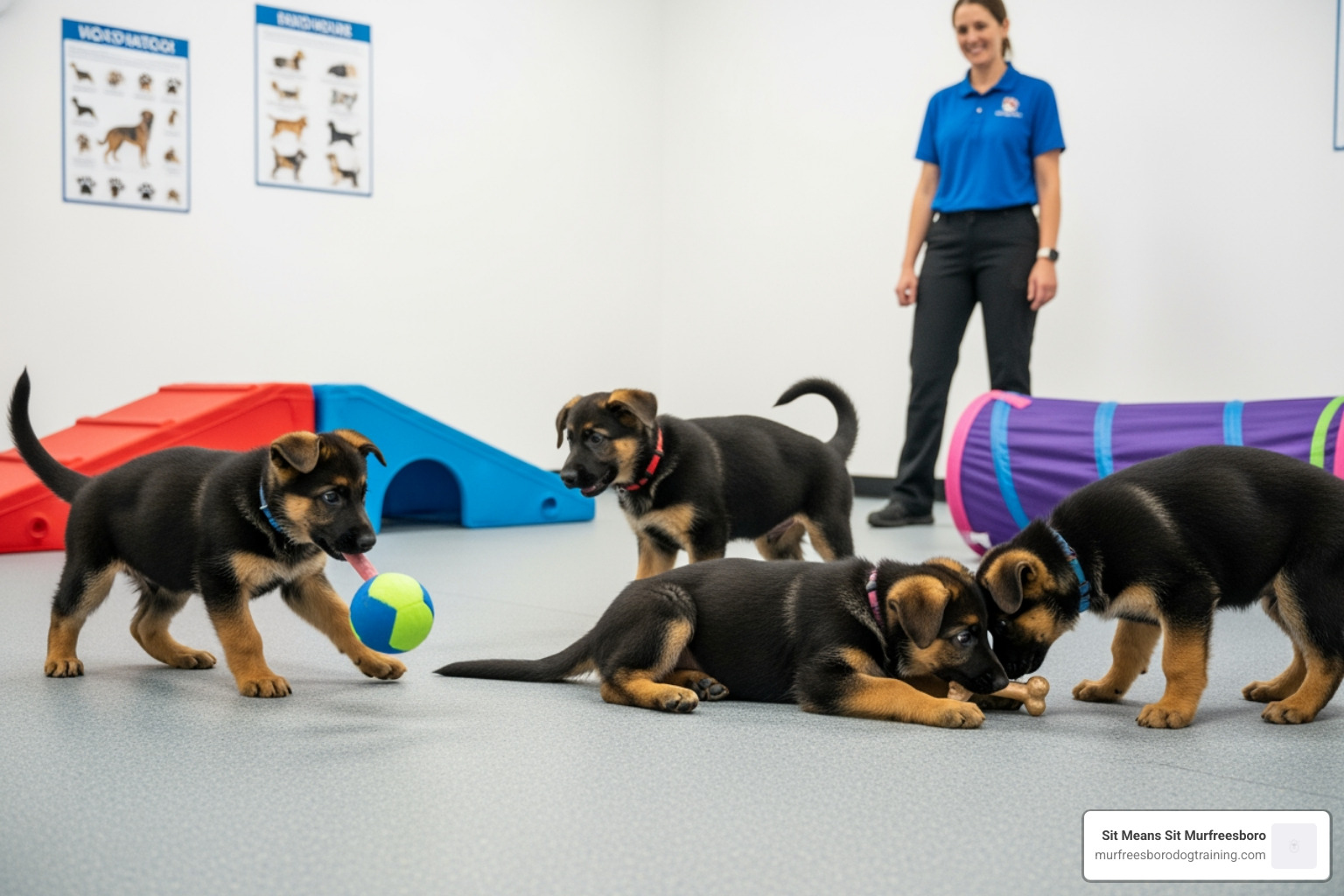
German Shepherds are known for being incredibly “biddable,” meaning they want to work with you. However, they can also be quite stubborn if they don’t see you as a clear, fair leader. Classes help establish this relationship early. By providing mental stimulation through structured tasks, we prevent the boredom that often leads to destructive chewing or excessive barking.
Understanding Training Challenges and Breed Traits is essential because GSDs have a natural tendency to be aloof or suspicious of strangers. Classes help bridge that gap, teaching them how to distinguish between a real threat and a neighbor walking their dog. Before you even head to your first session, we recommend checking off the items on our new-puppy-checklist to ensure you have everything from the right collar to high-value treats ready to go.
Essential Skills Taught in German Shepherd Puppy Classes
In our experience across Middle Tennessee, we’ve found that GSD puppies have a near adult-like capacity to learn by just 8 weeks of age. This makes the curriculum of a puppy class incredibly important. We don’t just teach “tricks”; we teach functional life skills.
- Foundational Commands: We start with the basics that every dog needs. Learning how to sit and how to lie down provides the framework for impulse control. Perhaps most importantly, we emphasize the recall—teaching your puppy to come when called regardless of distractions.
- Household Management: Classes often cover crate training and potty training. Crates aren’t just for when you’re away; they provide a safe “den” for your puppy. We also teach the “place” command, or how to go to their bed, which is a lifesaver when guests arrive at your door in Walterhill or Christiana.
- Bite Inhibition: German Shepherd puppies are affectionately (and sometimes painfully) known as “land sharks.” Because they were bred to herd and protect, they use their mouths for everything. Professional classes teach puppies how to control the pressure of their bite and when it is inappropriate to use their teeth on human skin.
Training Working Lines vs. Show Lines in German Shepherd Puppy Classes
Not all German Shepherds are created equal. If you’ve been researching breeders, you’ve likely come across the distinction between “working lines” and “show lines.” This distinction plays a massive role in how your puppy will behave in class.
Working Lines (often from Czech or East German lineages) are bred for high drive, intensity, and a strong work ethic. These puppies often need a “job” to do. In a class setting, they may require more frequent mental challenges to keep them from becoming frustrated. If you have a working line puppy, you’ll need to be very intentional about how-much-playtime-does-my-puppy-need to ensure they are burning off that intense energy.
Show Lines (American or German Sieger) are often bred for their physical appearance and a slightly more mellow temperament. While they are still high-energy compared to a Basset Hound, they might not have the same “edge” as a working dog. However, they are still large, powerful animals that require consistent training. Regardless of the line, you must ask yourself: how-much-exercise-does-my-dog-need? A tired GSD is a well-behaved GSD, but mental exercise in class is just as tiring as a long walk in Rutherford County.
The Critical Window for Socialization and Training
There is a biological “timer” running when you bring your puppy home. The critical socialization window for puppies closes between 12 and 16 weeks of life. This is the period when their brains are most flexible and open to new experiences.
According to the American Veterinary Society of Animal Behavior Socialization Position, it is actually more dangerous to keep a puppy isolated until they are fully vaccinated than it is to socialize them in a controlled environment. While you should avoid high-traffic areas like public dog parks until they’ve had all their shots, german shepherd puppy classes are kept clean and require all participants to have their first round of vaccines, making them a safe way to get that vital exposure.
During this window, we want to introduce your puppy to everything:
- People in hats, people with umbrellas, and people of all ages.
- Different surfaces like grass, gravel, and tile.
- Strange sounds like sirens, vacuum cleaners, and thunderstorms.
If you’ve recently moved, learning how-to-help-your-dog-adjust-to-a-new-home is a great first step before diving into full-scale socialization. Puppies have very short attention spans—usually only 5 to 10 minutes. This is why we keep our training sessions short, fun, and .
Addressing Breed-Specific Challenges Through Professional Guidance
German Shepherds are one of the most rewarding breeds to own, but they aren’t without their quirks. Professional guidance helps you steer the “teenage” months and beyond.
One of the biggest problems is their high prey drive. This can manifest as chasing squirrels, cats, or even cars. In class, we work on “leave it” and focus exercises to ensure your dog looks to you for direction rather than bolting after anything that moves.
We also address their natural protective instincts. While many owners want a dog that protects the home, an untrained GSD may decide that the mail carrier in Lascassas is a mortal enemy. We teach your dog to be discerning. Through not barking training and impulse control, we show them that you are the one who decides who is a guest and who is a threat.
If you notice your puppy becoming overly reactive, it’s important to seek help early. We specialize in beyond-the-bite-expert-strategies-for-canine-aggression-training to nip these issues in the bud before they become adult-sized problems.
Puppy Behaviors vs. Adult Expectations
| Puppy Behavior | Adult Expectation | Training Goal |
|---|---|---|
| Nipping/Mouthiness | Gentle mouth or “Off” | Bite inhibition and toy redirection |
| Jumping for attention | Sitting for greetings | Impulse control and “Four on the floor” |
| Pulling on the leash | Polite loose-leash walking | “Heel” command and engagement |
| Barking at noises | Calmly observing environment | Desensitization and confidence building |
| Chasing moving objects | Staying focused on owner | High-level recall and “Leave it” |
What to Look for in a German Shepherd Puppy Instructor
Not every dog trainer is a “German Shepherd person.” When looking for german shepherd puppy classes in Middle Tennessee, you want someone who understands the breed’s unique psychology.
First, look for an instructor who emphasizes clear communication. German Shepherds thrive on knowing exactly what is expected of them. A good trainer will show you how to be a “fair and solid leader”—someone who is consistent but never harsh. Hiring a professional trainer who uses positive reinforcement ensures your puppy builds a bond of trust with you rather than a bond of fear.
In Murfreesboro, you should know what to expect from local experts. Our guide on professional-dog-training-in-murfreesboro-tn-what-local-dog-owners-should-expect outlines the importance of structured environments and small class sizes. You don’t want your puppy lost in a crowd of twenty dogs; you want personalized attention to ensure they are progressing at the right pace.
Beyond the Classroom: Reinforcing Behaviors at Home
The hour you spend in class each week is just the beginning. The real work happens in your living room and on the streets of Rockvale or Smyrna. Consistency is the secret sauce of dog training. If your puppy isn’t allowed on the couch on Tuesday, they shouldn’t be allowed on it on Wednesday just because you’re tired.
Daily practice is essential. We recommend three to five short sessions a day. These don’t have to be formal; you can practice “sit” before you put their food bowl down or “stay” while you open the door.
Walking is another great opportunity for reinforcement. Start practicing loose leash walks in low-distraction environments like your hallway before moving outside. Our how-to-teach-your-dog-to-heel-a-complete-training-guide can help you master the art of the walk.
Don’t forget mental enrichment! German Shepherds love to use their noses. Engaging in nose work or hide-and-seek with treats can tire out a GSD faster than a two-mile run. As they grow, keep an eye on their developmental milestones and consult with your vet about when-should-i-stop-feeding-my-dog-puppy-food. Proper nutrition supports brain development, which in turn supports your training efforts.
Frequently Asked Questions about GSD Puppy Training
What is the ideal age to start German Shepherd puppy classes?
Most experts and veterinarians agree that you can start classes as early as 8 weeks old, provided the puppy has had their first round of vaccinations. Starting early ensures you take advantage of the critical socialization window that closes by 16 weeks.
Are German Shepherd puppies easy to train compared to other breeds?
Yes and no! They are incredibly intelligent and eager to please, which makes them learn commands very quickly. However, their high energy and intelligence mean they can also learn bad habits just as fast. They require a more engaged owner than a lower-drive breed might.
How do classes help with a German Shepherd’s protective instincts?
Socialization is the best “anti-aggression” tool we have. By exposing your puppy to many different types of people and dogs in a positive way, you teach them that the world is a safe place. A confident dog only protects when there is a real threat; an insecure dog “protects” (barks/lunges) because they are afraid of everything they don’t know.
Conclusion
At Sit Means Sit Murfreesboro, we understand that your German Shepherd is more than just a pet—they are a protector, a partner, and a family member. Our goal is to provide you with the tools to harness their incredible potential, ensuring real-world reliability whether you’re walking through downtown Murfreesboro or relaxing at home in Rutherford County.
Training a GSD is a journey that lasts a lifetime, but it starts with those first few steps in a puppy class. By investing in professional guidance early, you are setting the stage for a confident, obedient, and happy companion.
Ready to see what your puppy is truly capable of? Start your journey with our training programs today and build the bond you’ve always dreamed of.