

Why Dog Behavioral Issues Are More Common Than You Think
Dog behavioral issues affect nearly every pet owner at some point. If you’re dealing with aggression, anxiety, destructive chewing, or other concerning behaviors, you’re not alone—and there are proven solutions.
Quick Answer: Most Common Dog Behavioral Issues
| Behavior Problem | Prevalence | Key Signs |
|---|---|---|
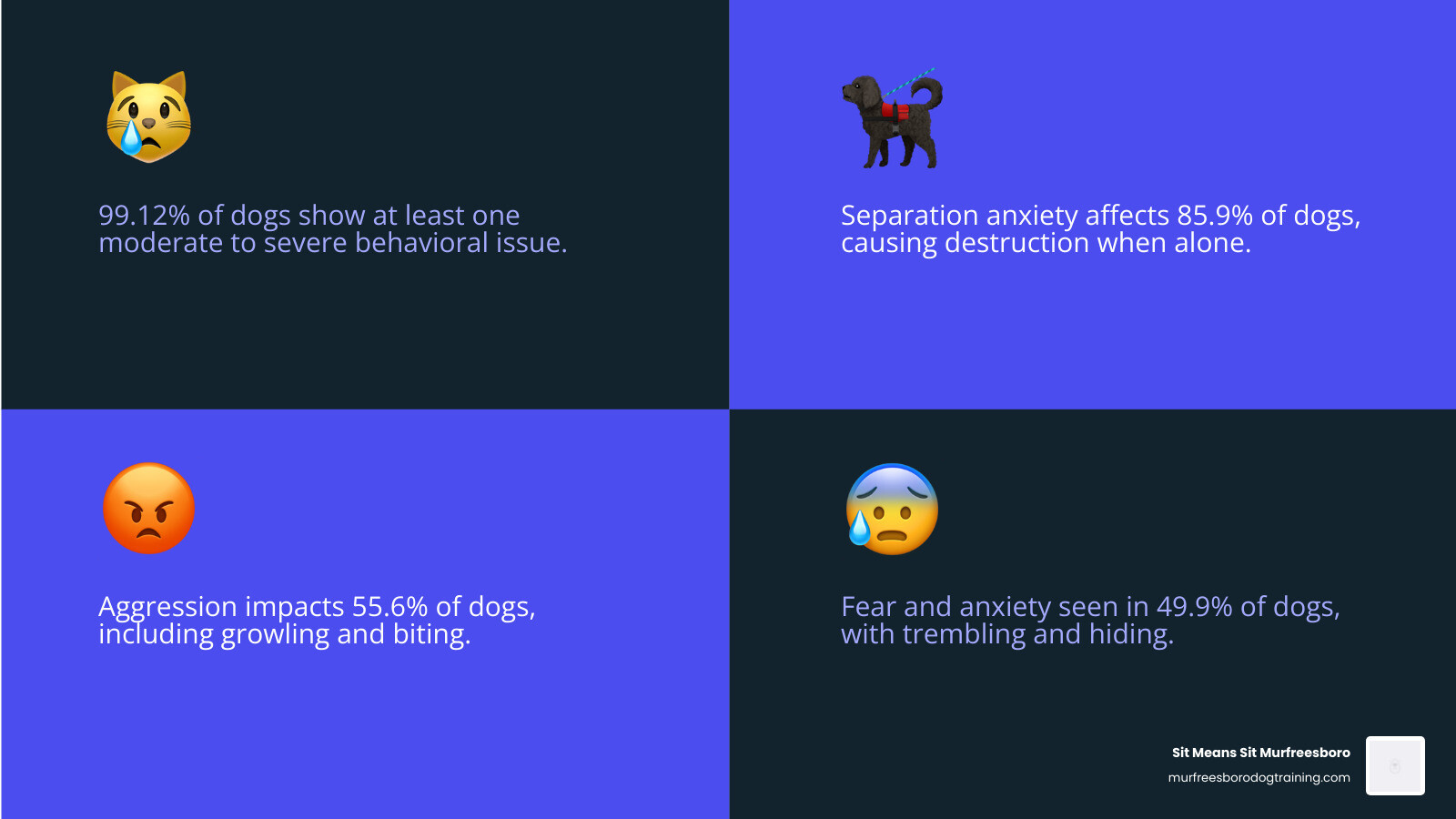
| Separation Anxiety | 85.9% | Destructive behavior when alone, escape attempts, vocalization |
| Aggression | 55.6% | Growling, snapping, biting toward people or other dogs |
| Fear and Anxiety | 49.9% | Trembling, hiding, excessive panting, avoidance |
| Destructive Chewing | Very Common | Damaged furniture, walls, personal items |
| Excessive Barking | Very Common | Persistent vocalization triggered by various stimuli |
The numbers are striking: 99.12% of dogs show at least one moderate to severe behavioral issue according to research from the Dog Aging Project. With dogs living in 59.8 million U.S. households, behavioral challenges touch almost every dog owner’s life.
The good news? Most behavioral issues stem from manageable causes like boredom, insufficient mental stimulation, or anxiety—not from a “bad dog.” Understanding the root cause is the first step toward real solutions.
Whether your dog destroys your home when left alone, lunges at other dogs on walks, or shows signs of aggression, the key is identifying why the behavior happens before attempting to fix it. Medical issues, breed-specific needs, environmental changes, and training gaps all play critical roles.
I’m Stephen Sovenyhazy, and while my primary expertise lies in digital strategy and platform engineering, I’ve researched extensively into dog behavioral issues to help local service businesses like Sit Means Sit Murfreesboro better serve frustrated pet owners seeking effective, personalized solutions. This guide draws from veterinary research, certified trainer protocols, and real-world case studies to help you understand and address your dog’s behavioral challenges.
Understanding the Most Common Dog Behavioral Issues
When we talk about dog behavioral issues, we aren’t just talking about a puppy who hasn’t learned to sit yet. We are looking at deep-seated habits and emotional responses that can make life stressful for both you and your pup. According to research published in the Journal of Veterinary Behavior.), nearly every dog displays some form of problematic behavior.
Aggression is perhaps the most serious issue we encounter. It isn’t a single “mood” but a reaction to a perceived threat. It can manifest as guarding food, snapping at strangers, or lunging at other dogs. Resource guarding is a specific type of aggression where a dog becomes protective of “high-value” items like bones, toys, or even their favorite human.
Leash reactivity is another common frustration. You might have a dog who is a total angel at home but turns into a “monster” the moment the leash goes on. This is often an emotional response rooted in insecurity or a lack of structure. The leash acts as a barrier, and when the dog feels they can’t move away from a trigger (like a loud truck or another dog), they resort to barking and lunging to create space.
Then there is excessive barking. Whether it’s barking at the mailman, the wind, or your neighbor’s cat, identifying the function of the bark is the first step toward a quiet home. You can find more details on these in this common behavior issue guide.

Identifying Separation Anxiety as a dog behavioral issues
One of the most heartbreaking dog behavioral issues is separation anxiety. This isn’t just a dog “missing” you; it’s a full-blown panic attack that occurs the moment you leave.
Common symptoms include:
- Destructive Chewing: Specifically focused on “exit points” like door frames, windowsills, or the carpet near the front door.
- Pacing and Panting: Showing signs of distress even before you leave (like when you pick up your keys).
- Vocalization: Persistent howling or barking that starts shortly after your departure.
- Escape Attempts: Dogs may injure themselves trying to break out of crates or rooms.
- Coprophagia: In some high-stress cases, dogs may ingest their own waste due to the extreme anxiety of being alone.
If your dog is turning your living room into a confetti factory while you’re at work, it’s vital to look at separation anxiety symptoms and protocols. Understanding that this is a panic response—not spite—is crucial for effective training.
Breed-Specific Needs and dog behavioral issues
Sometimes, what we call a “behavior problem” is actually just a dog trying to do the job they were bred for. Take the Corgi, for example. Despite their fluffy appearance and short legs, Corgis are high-drive herding dogs. If a Corgi doesn’t have a flock of sheep to manage, they might try to “herd” your children by nipping at their heels.
High-energy breeds and working dogs (like Shepherds, Collies, and Pointers) require significant mental and physical outlets. Without proper stimulation, these dogs become “unemployed,” and an unemployed working dog will quickly find a “job” you won’t like—such as deconstructing your sofa or digging a hole to the center of the earth. Breed-specific advice often centers on satisfying that working drive through sports, advanced obedience, or scent work.
Root Causes: Boredom, Anxiety, or Medical?
Before we can fix a behavior, we have to know where it’s coming from. Is your dog destructive because they are bored, or because they are terrified?
| Feature | Boredom | Separation Anxiety |
|---|---|---|
| Timing | Can happen anytime, even when you are home. | Starts within 20–40 minutes of your departure. |
| Location | Random items (shoes, pillows, remote). | Exit points (doors, windows, crates). |
| Physical Signs | Dog usually looks relaxed or “guilty” when you return. | Excessive drooling, panting, or self-injury. |
| Energy Level | Often improves with a long walk or play session. | Exercise helps, but doesn’t “cure” the panic. |
It is also vital to rule out medical causes. A dog that suddenly becomes aggressive may be in pain. A dog that starts having accidents in the house after years of being potty trained might have a urinary tract infection or a nutritional issue. We always recommend a thorough vet check to ensure your dog is physically comfortable before assuming it’s a training-related issue.
Learning to read your dog’s subtle cues is a game-changer. You can check out these body language resources to learn the difference between a “happy” tail wag and a “nervous” one. Environmental triggers, such as a recent relocation or a change in household members, can also spike stress levels and lead to new dog behavioral issues.
Management Strategies for Destructive dog behavioral issues
While we work on the root cause, we need to protect your home (and your dog’s safety). Immediate management is about preventing the dog from practicing the bad behavior.
Crate training is one of our most effective tools. When done correctly, a crate becomes a “den-like” space where the dog feels safe and relaxed. It shouldn’t be a place of punishment; it should be a bedroom. If your dog is destroying the house during an 8-hour shift, you might need to look into midday breaks. Hiring a dog walker or using a reputable daycare can break up the day and provide the social interaction your dog craves.
Enrichment and Mental Stimulation
A tired dog is a good dog, but mental exhaustion is often more effective than physical exhaustion. If you have a high-energy breed, “fetch” might just make them a more athletic version of a bored dog. Instead, try:
- Puzzle Toys: Make them work for their dinner.
- Frozen Kongs: Keeps them occupied for 20-30 minutes of soothing licking.
- Cardboard Destruction: Let them shred a cardboard box (it’s cheap and satisfies the urge to “kill” something).
- Food Scattering: Toss their kibble in the grass or on a “snuffle mat” to engage their nose.
- Lettuce Shredding: Believe it or not, watching a Corgi “slaughter” a head of cabbage is great enrichment (and low calorie!).
Desensitization and Counterconditioning
For dogs with anxiety, we use desensitization. This means gradually exposing them to the thing they fear at a very low level. For separation anxiety, this might mean practicing “predeparture cues” without actually leaving. Pick up your keys, then go sit on the couch. Put on your coat, then go make a sandwich.
Counterconditioning is about changing the dog’s emotional response. We want them to think: “When Mom leaves, I get this amazing frozen peanut butter toy! Maybe her leaving isn’t so bad after all.”
What to avoid: Never punish a dog for anxious behaviors. Yelling or physical corrections will only increase their fear, making the dog behavioral issues even worse. Keep your greetings and departures calm and boring. If you act like your return is a massive party, your dog will spend all day anxiously waiting for the party to start.
Professional Intervention and Medical Support
Sometimes, despite our best efforts, we need backup. If your dog’s behavior is becoming dangerous or if they are causing significant self-injury, it’s time to call in the experts.
A veterinary behaviorist is a vet with advanced training in behavioral medicine. They can help diagnose complex issues like behavioral disinhibition or severe compulsive disorders. Working alongside a certified trainer, they can create a holistic plan that includes both training and, if necessary, medical support.
Medications for Severe Anxiety
In severe cases of dog behavioral issues, medication can “lower the ceiling” of the dog’s anxiety so that training can actually take place. It isn’t about sedating the dog; it’s about helping them reach a state where they can learn.
Commonly used medications include:
- Fluoxetine (Prozac): An SSRI often used for separation anxiety and aggression.
- Trazodone: Used for situational anxiety (like vet visits or storms).
- Clomipramine: FDA-approved for canine separation anxiety.
- Dexmedetomidine Oral Gel: Specifically for noise aversions (thunder, fireworks).
Potential side effects can include lethargy, decreased appetite, or vomiting. Always consult with your vet to find the right balance for your specific pet.
Frequently Asked Questions about Dog Behavioral Issues
How do I distinguish between boredom and separation anxiety?
Monitoring is key. Use a camera to watch your dog after you leave. If they destroy something in the first 10 minutes while panting and drooling, it’s likely anxiety. If they nap for three hours and then decide to deconstruct a shoe because they woke up feeling frisky, it’s likely boredom. Anxiety focuses on “exit points” (doors), while boredom focuses on “fun” items (your remote).
What is the most common and serious behavior problem in dogs?
Aggression remains the most common and serious issue. Whether it’s fear-based biting, territorial guarding, or possessive behavior over toys, it requires immediate professional attention. Safety protocols, such as using muzzles in public and strict child supervision, are mandatory when dealing with aggressive tendencies.
What should I avoid doing when my dog misbehaves?
Avoid physical punishment, yelling, and “alpha” corrections. These methods often backfire, especially with anxious dogs, as they destroy the bond of trust between you and your pet. Inconsistent boundaries are also a major hurdle—if the dog is allowed on the couch on Monday but yelled at for it on Tuesday, they will become stressed and confused.
Conclusion
At Sit Means Sit Murfreesboro, we understand that dealing with dog behavioral issues can feel overwhelming and lonely. Whether you’re in Murfreesboro, Smyrna, or anywhere in Rutherford County, we are here to help. Our focus is on real-world reliability—ensuring your dog listens not just in a quiet classroom, but at the park, on the trail, and in your living room.
We offer personalized training programs designed to address complex behavioral solutions and provide the ongoing support you need to succeed. You don’t have to manage these challenges alone. Let’s work together to transform your dog into the confident, obedient companion you know they can be.
Ready to start your journey toward a better life with your dog? Explore our professional training programs or contact Sit Means Sit Murfreesboro today to schedule your consultation!